Medical Physicist · Healthcare AI · Radiation Medicine
Bridging medical physics, AI, and clinical research to support safer and more personalized cancer care.
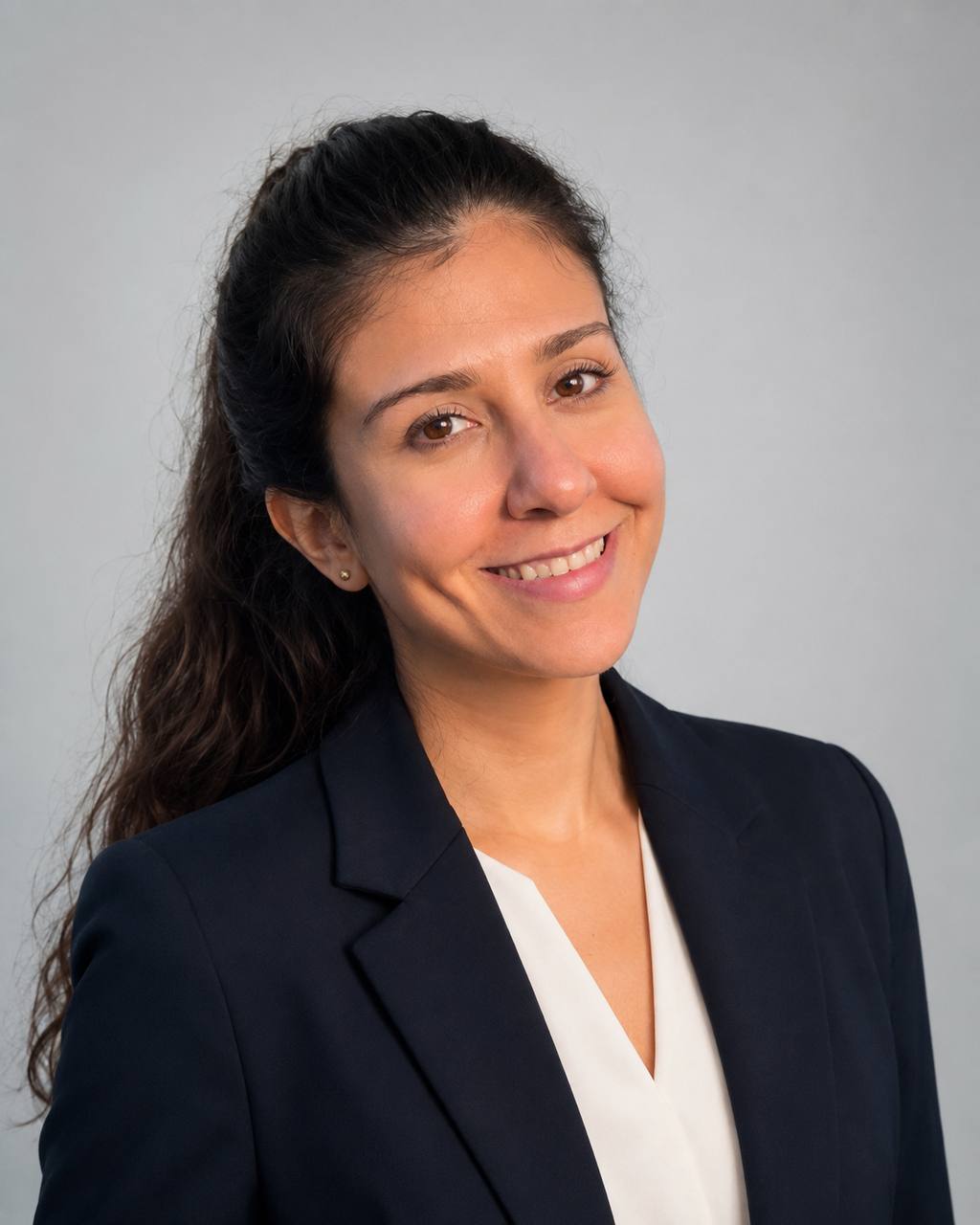
I am a medical physicist with an MSc from the CAMPEP-accredited Medical Physics program at Université Laval and an IAEA Marie Skłodowska-Curie Fellow. My work combines hands-on experience in radiotherapy dosimetry and quality assurance with AI research in oncology, medical imaging, and multimodal clinical/imaging data analysis.
I graduated with my M.Sc. in June 2026 and am now a Research Assistant in the lab of Dr. Miranda Kirby at Toronto Metropolitan University, working on chest CT segmentation and quantitative imaging biomarkers, a part-time Research Consultant in Medical AI with the Experimental Uro-Oncology Laboratory of Dr. Frédéric Pouliot at CRCHU de Québec–Université Laval, and a member of the Fall 2026 cohort of the Quebec Scientific Entrepreneurship Program (QcSE). During my year at the IAEA Dosimetry Laboratory (2025 to 2026), I worked on radiotherapy dosimetry, audit methodology, and quality assurance initiatives, including data analysis for a multi-centre end-to-end brachytherapy dosimetry audit and the development of Python-based software for independent dose evaluation and verification in OSLD/RPLD dosimetry audits. My M.Sc. thesis focused on graph neural networks, survival modeling, and multimodal clinical/imaging data integration for cancer prognosis, and I bring three years of healthcare AI industry experience developing deep learning tools for medical imaging applications.
Toronto, Canada
Education
MSc Medical Physics
CAMPEP-accredited program, Université Laval · Graduated June 2026
IAEA Marie Skłodowska-Curie Fellow
Now
Research Assistant · Medical AI Consultant
Dr. Miranda Kirby Lab, Toronto Metropolitan University · Experimental Uro-Oncology Lab, CRCHU de Québec
QcSE Fall 2026 cohort · IAEA Dosimetry Lab alumna (2025 to 2026)
Focus
Clinical translation in radiation medicine
Medical physics · Healthcare AI · Multimodal cancer prognosis
What I am doing now
Updated November 2026
Research
Research Assistant, Kirby Lab, TMU
In the quantitative imaging and machine-learning lab of Dr. Miranda Kirby, Department of Physics, Toronto Metropolitan University (since October 2026). I perform lung and airway segmentation on chest CT and extract quantitative imaging biomarkers (airway wall thickness, total airway count, density-based measures) using VIDA and Python, within a research program on CT imaging biomarkers for predicting lung disease.
Research
Research Consultant (Medical AI), CRCHU de Québec
Part-time, remote, in the Experimental Uro-Oncology Laboratory of Dr. Frédéric Pouliot at CRCHU de Québec–Université Laval (since October 2026). I develop and evaluate deep learning approaches for segmentation and Gleason grading of prostate cancer histopathology whole-slide images, integrate imaging features with clinicopathological data in predictive models, and support bioinformatics analysis of single-nucleus RNA sequencing data on prostate cancer metastasis.
Program
QcSE, Fall 2026 cohort
Selected participant in the Quebec Scientific Entrepreneurship Program, a training program for researchers who want to bring scientific work closer to real-world impact. Supported by the Fonds de recherche du Québec.
Recent
IDOS 2026 poster, Vienna, October 2026
Our analysis of 22 years of IAEA QUATRO radiotherapy audits through quality indicators was presented as a poster at the IAEA International Symposium on Standards, Applications and Quality Assurance in Medical Radiation Dosimetry (October 5 to 9, 2026). The manuscript is under co-author revision.
Recent
Accelerator Technology Education Course (ATec), October 26 to 28, 2026
Attended this in-person course at Princess Margaret Cancer Centre, Toronto, on how medical linear accelerators work, how beams are tuned, and how faults are diagnosed, with lectures, demonstrations, and hands-on labs covering imaging systems and the safety and regulatory side of accelerator servicing.
Explore
Projects →
Selected academic, clinical, and AI projects at the intersection of medical physics, radiation medicine, and healthcare technology.
Publications →
Peer-reviewed articles, manuscripts, and conference presentations in medical physics, oncology, imaging, and AI.
Experience →
My background across radiation medicine, dosimetry and QA, research, and healthcare AI.
Certificates →
Degrees, the IAEA fellowship, programs, and certificates.